
What Is It About Skin Tone? Black Hypocrisy…
- Zawadi Shakura Jai
- Jun 17, 2025
- 4 min read

Updated: Mar 12
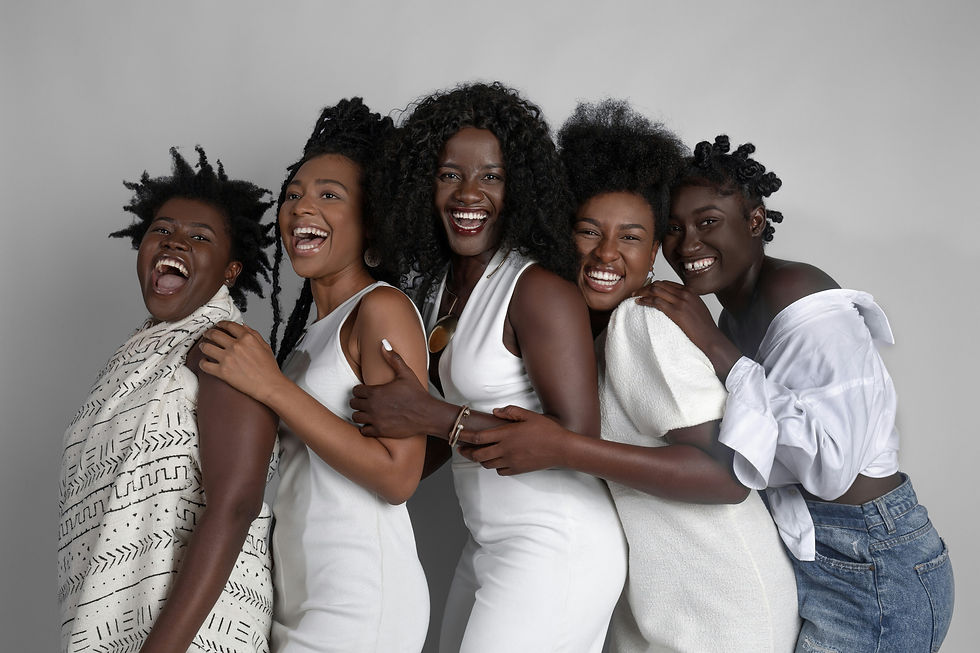
Why did my mother never hesitate to remind me of the day my biological father visited the hospital where I was born - how he deliberately checked behind my ears to see what complexion I would be? Clearly, in his eyes, I was going to be too dark for his liking, because he never looked back. He walked out of the maternity ward in Watford and out of my life. I didn’t see him again until I was pregnant with my first child, twenty four years later.
As I lay deeply immersed in the steaming waters of my ritual salt bath one evening, this memory surfaced again. I found myself thinking about childhood and how I was made to feel about my cocoa-coloured skin.
This wasn’t just a vague feeling - no, I was treated differently. Less wanted, less loved, less cared for. This treatment came not from outsiders, but from within my own family.
My mother and I shared the same complexion. Her husband, his sons, and my younger sister were much lighter “high yellow,” as some would say. I was the darkest of the four siblings. The message I personally received was, that no matter the colour of you, if your a darker hue, then you are less deserving...
I learned early on that skin tone could be weaponised to downgrade another person. Just as it was on the plantations, where darker-skinned enslaved people worked outside in harsher conditions and were treated with more hostility than the lighter-skinned ones, my darkness became a marker of inferiority. I was ridiculed, mocked, and called “African” in the 70s and 80s, when many of us were unaware of our origins. Back then, being called African was meant as an insult, a reflection of internalised ignorance.
Later, in my adolescence and early twenties, I was told I was “not Black enough.” What did that even mean? Through it all, I struggled but I also grew. Today, I embrace my ancestry. I define myself as an African woman, born in the UK to parents born in the Caribbean.
I know siblings can be cruel, but that doesn’t lessen the damage their words and actions caused. My mother used to tell me often that my mouth “spoiled my face,” and over time, I grew to hate my own reflection. Through my own evolution, I’ve noticed how this hierarchy of skin tone persists among people of African descent. Being half-Jamaican, half-Barbadian, I saw it from both sides. Knowing how much psychological pain it caused me, I refuse to continue this generational cycle. Too often, I’ve seen Black people use anything - including skin tone to gain some imagined higher status over one another.
Why do we allow skin tone to hold such power over us?
Colorism runs deep. It’s one of those taboo subjects that requires compassionate and undivided attention. We need to dismantle the false layers that corrupt our minds and take responsibility for how we perpetuate discrimination within our own communities.
Perhaps colourism is less of an issue in places where the majority of people look alike. Perhaps it’s more pronounced among those of us living in the diaspora, where the shadow of slavery still lingers. If that’s true, then maybe the change must start with us. We come in many shades of beautiful hues, none more so than the other. It's important that we recognise this truth and not feed into a mental dis-ease that deforms so many of us.
Colourism is defined as “prejudice or discrimination against individuals with a dark skin tone, typically among people of the same ethnic or racial group.”
Growing up, I was made to feel that my darker skin was a curse. I was told directly and indirectly that lighter was better, prettier, more lovable, more worthy. I would cover my elbows and knees in the summer to hide my darker patches. Now, in my late fifties, I am finally grateful for my chocolate-brown complexion. I am aware it is still an sociatal issue today. Colorism is so ingrained in our families that some do not even recognise it or worse, refuse to admit its harm.
Why do we continue to use skin tone to mistreat, undermine, and divide one another?
I must also mention hair texture. That, too, became a source of pain. My natural hair was regularly pressed with a hot comb on Sunday evenings, the smell of burning hair filling the room, my neck and ears sometimes singed in the process. By Monday morning, I had to endure the fascinated stares of classmates at my “transformation.” For a brief, superficial moment, I was finally noticed.
Colorism is not new. It is rooted in history, in classism, in colonisation. Studies show that long-term discrimination based on skin tone can lead to anxiety, depression, low self-esteem, trauma symptoms, and even body dysmorphic disorder.
Children learn these prejudices early. The famous “Doll Test” showed that both white and Black children preferred white dolls over Black ones, describing the white dolls as “good” and the Black dolls as “bad” or “ugly.”
And we cannot forget skin bleaching. Despite its dangerous side effects, bleaching remains popular worldwide. Some believe lighter skin brings better opportunities - for marriage, for work, for social acceptance. In Jamaica, bleaching is colloquially called “rubbing” or “toning.” One evening after my bath, I stumbled upon the song Black Hypocrisy by the dancehall artist Spice. I was moved to tears. Her song confronts this painful truth head-on. Despite the controversy surrounding her promotion of the song where she appeared with bleached skin and long blonde hair, her message was powerful.
Colorism is still destroying lives. It’s time we do better.
Additional Resources
“Black girls lose self-confidence cause they attach the word ‘ugly’ to our complexion,” she sings, emphasising the effect colourism has on mental health and preaching self-love and appreciation. https://www.artshelp.com/spice-black-hypocrisy/
We must keep having these conversations, take responsibility for the harm we’ve done, and pour love into the next generation.
Let’s embrace our unique beauty, our variations of blends, of textures and celebrate one another - regardless of skin tone.
------------------------------
On the same topic...


Comments